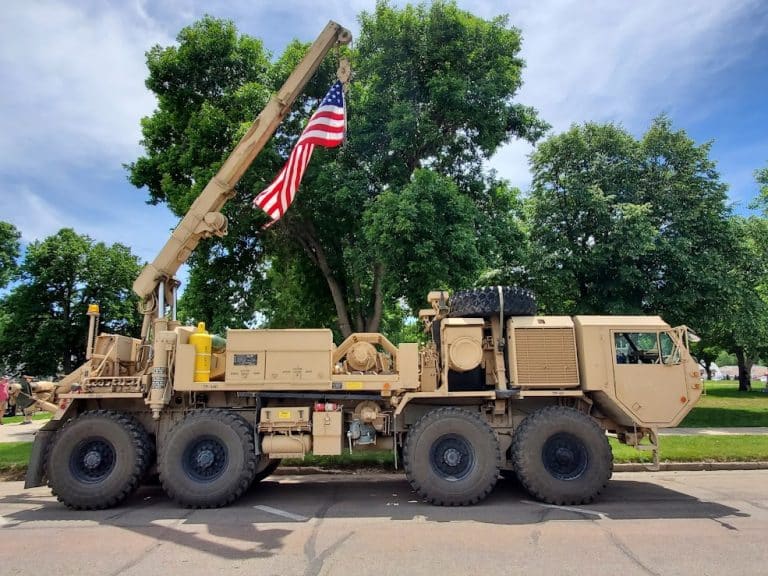


(Army Truck - KIWA Staff Photo)Middletown, Iowa (RI) — The U.S. Army says Wednesday’s controlled detonation of nearly five tons of unstable lead azide at the Iowa Army Ammunition Plant went as planned, while a southeast Iowa farmer who lives near the site described the event as largely uneventful.
Nearby Farmer Reports Little Visible Impact
Jeff Ellis, who raises corn and soybeans near Donnellson, about 30 miles from the ammunition plant, says his family sheltered in place during the operation.
Ellis says EPA crews collected air, water and soil samples in his area before the detonation, but he hasn’t decided whether to conduct additional soil testing on his farm.
Ellis says someone should be held responsible for the mistakes that led to Wednesday’s detonation. He questioned why the aging material was allowed to remain in storage for so long.
The EPA reported that initial air monitoring had not detected elevated levels of lead in southeast area.
Military, State Leaders React to Successful Blast
Military officials, however, described the operation as a success.
Major General Eric Shirley, who commanded the detonation operation, said the soil, water, and foam infrastructure built around the two bunkers contained the lead azide threat.
Shirley spoke during a five-minute video briefing organized by the Army.
He said there were no secondary explosions and no reported infrastructure damage in or around the Iowa Army Ammunition Plant.
Robert Cekada, director of the Bureau of Alcohol, Tobacco, Firearms and Explosives, said the detonation was well executed.
Residents outside the facility reported hearing and, in some cases, feeling two blasts, followed by two white plumes rising hundreds of feet into the air.
Federal Emergency Management Agency Administrator Cameron Hamilton said additional soil, air and water testing will continue in the days and weeks ahead.
Gov. Kim Reynolds called the outcome the best-case scenario for residents and praised what she described as a flawless operation.
Governor-elect Rob Sand expressed appreciation for the experts involved in the detonation but said Iowans still deserve answers about how the lead azide situation developed and why it reached the point where a detonation became necessary.
The lead azide destroyed Wednesday was over 80 years old. The material had been stockpiled in southeast Iowa since 2009.