


(KIWA Staff Photo)Cherokee, Iowa (KAYL) — Cherokee County supervisors are considering changes to regulations governing commercial wind turbines, including how close turbines can be built to homes and how much developers should pay to help cover the county’s costs.
During their weekly meeting Tuesday, supervisors approved an amended summary of the proposed wind energy ordinance for publication and scheduled the first reading of the ordinance for 9 a.m. Nov. 10th.
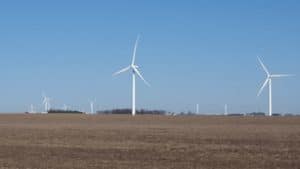
The proposal would replace existing language in Section 4 of the county’s Wind Energy Device Ordinance. Under the amendment, commercial wind turbines would generally have to be located at least two-and-a-half times the height of the blade’s highest point from a human-occupied residence.
The setback could be reduced through a waiver from a landowner, but not below 1,320 feet. Additional setbacks could also be required to address concerns such as noise, shadow flicker, and other documented impacts on nearby residents.
The discussion comes as Chicago-based Invenergy continues to pursue its proposed Plymouth II Wind Energy Center, a 200-megawatt project spanning Cherokee and Plymouth counties. County officials emphasized that Tuesday’s action does not approve any specific wind project.
Supervisors also discussed whether current developer fees adequately compensate the county for the costs associated with reviewing and overseeing large energy projects.
Board member Shane Bellefy said the county should ensure taxpayers are not left covering expenses related to wind energy development and suggested future boards should regularly review fee structures rather than allowing them to remain unchanged for long periods.
Discussion included whether the Consumer Price Index could serve as a guide when evaluating future fee adjustments, though questions were raised about the legal basis for such an approach.
Bellefy also pointed to additional demands placed on county departments, including the Secondary Roads Department, when large development projects are proposed.
The fee discussion also touched on how wind development could affect county finances before additional property tax revenue becomes available. Bellefy referenced the possibility of a project involving 40 wind turbines and said the county needs to be prepared for the financial risks that can accompany major construction.
He said Cherokee County’s work on wind, solar, and other development rules is drawing attention and could help the county prepare for future proposals.
Bellefy also raised the question of whether the county should examine the difference between landowners who live in Cherokee County and those who own land there but reside elsewhere. He compared the issue to hunting and fishing licenses, which charge different fees to residents and nonresidents.
Cherokee County has already adopted a separate ordinance regulating solar energy systems, including utility-scale installations. That ordinance established requirements such as setbacks, permitting, agriculutral impacts, noise, road conditions, and eventual decommissioning. The wind turbine setback amendment is a separate measure.
Bellefy said the goal of the fee discussion is to provide another layer of protection for county taxpayers while preparing for future development and financial pressures.
Tuesday’s action advances the amendment through the ordinance process but does not constitute final approval. The full amended ordinance is availalbe through the Cherokee County Auditor’s Office.


